
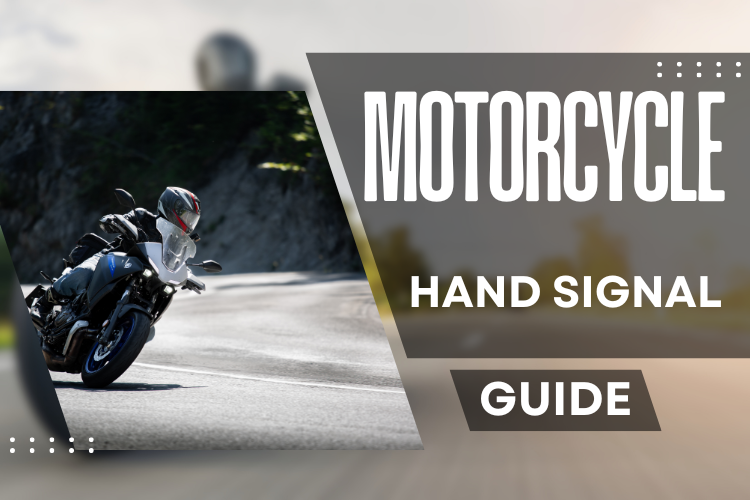
This is especially important during group rides or situations where visibility is limited. These visual cues help riders coordinate speed changes, turns, and hazard responses while keeping everyone safe on the road.
Whether you are a beginner rider or have years of experience, learning and regularly using motorbike hand signals builds trust, reduces confusion, and helps prevent accidents. This guide explains each signal, how to use it properly, and why mastering these gestures is essential for confident riding.
Key Takeaways
- Motorcycle hand signals provide clear, universal communication, helping riders express their intentions when lights aren’t enough.
- Standard signals cover turns, stopping, speed changes, and hazards, improving coordination during group rides.
- Using consistent and predictable motorbike hand signals increases safety for both riders and surrounding drivers.
- Practicing each hand signal before riding in traffic boosts confidence, especially for beginners navigating busy or unfamiliar routes.
In This Guide:
- Motorcycle Hand Signals Guide
- Motorbike Hand Signals – What Are They?
- How to Use Hand Signals on a Motorcycle
- Motorcycle Hand Signal FAQ
Motorcycle Hand Signals Guide
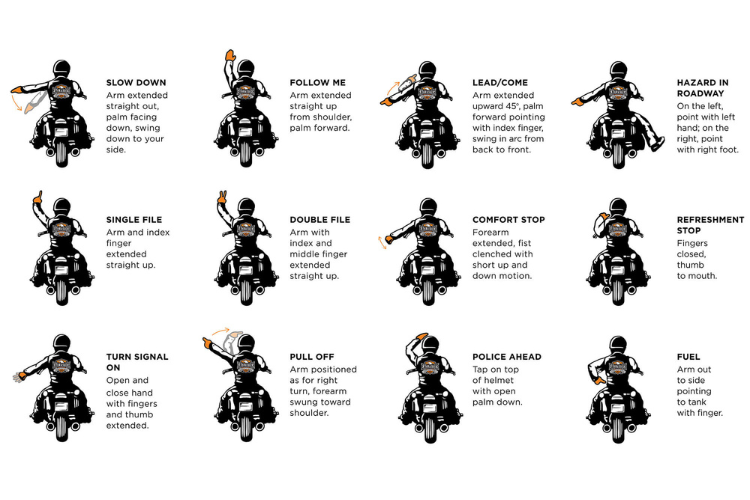
Good communication while driving a motorcycle ensures the safety of both the rider and others on the road. While motorcycles are equipped with turn signals and brake lights, there are situations where hand signals are necessary. This guide will explain the most frequently used hand signals for motorcycles. It is important for both new and professional riders to learn these signals. These signals will help you communicate with other riders and motorists in an effective manner.
Protip: Always prioritize safety and follow traffic laws, especially when touring new areas.
For more tips on enjoying the motorcycle lifestyle, check out our guides on the best motorcycle bike rallies, top motorcycles for beginners, and the pros and cons of motorcycles.
Motorbike Hand Signals – What Are They?
Motorcycle hand signals are a universal way for riders to communicate their intentions while riding the motorcycle. These signals ensure that everyone on the road is aware of a rider’s next move, especially during group rides. Proper use of motorbike hand signals enhances your safety and the safety of those riding with you.
Left Turn
Extend your left arm horizontally out to the left with your palm facing down to signal a left turn. This signal is one of the most common and is used when you want to indicate that you will be turning left at an intersection or corner.
Right Turn
Extend your left arm and bend it upward at a 90-degree angle for a right turn, with your palm facing forward. Alternatively, you can extend your right hand horizontally to signal a right turn. Other road users universally understand either of these hand signals.
Speed Up
Extend your left arm downward with your palm facing backward to indicate that you want the group to speed up. Keep your arm straight, and make a slight upward motion as if pushing the throttle. This signal is usually used when riding in groups, signaling others to increase their speed.
Slow Down
Extend your left arm downward with your palm facing down to signal that the group should slow down. You can also make a slight motion by moving your hand downward to indicate a decrease in speed. This is an essential hand signal when riding in close formation or traffic.
Stop
To signal a stop, extend your left arm downward with your palm facing the rear of your bike. Another common stop signal is raising your left arm and making a fist. Both signals alert others to your intention to stop, whether due to a red light, traffic stop, or safety concern.
Roadway Hazard
There are two standard hand signals to warn others about roadway hazards, depending on whether the hazard is on the left or right side of the road.
Left-Side Hazard
Extend your left arm horizontally to warn of a hazard on the left side, with your index finger pointing directly to the left. This is commonly used when debris, potholes, or animals are on the left side of the road.
Right-Side Hazard
For a hazard on the right, extend your left arm with your index finger pointing upward at a 45-degree angle. This alerts fellow riders that there’s a problem on the right side of the road.
Follow Me
To indicate that riders should follow you, extend your left arm vertically with your hand in a fist, then make a sweeping motion as if inviting others to follow your lead. This is often used in group rides to direct others to take a specific route or follow your pace.
Comfort/Refreshment Stop
When it’s time to take a break or stop for refreshments, extend your left arm at a 45-degree angle and hold your hand in a fist. This signals a near-comfort stop; riders should be prepared to pull over.
Pull Off
If you need to pull off to the side of the road or into a parking area, extend your left arm downward, palm facing down, and fingers slightly spread. This signal is often used when riders need to exit the highway or make a quick detour.
Single File
When riding in a group, it’s time to ride in a single file formation, extend your left arm and point downward with your index finger. This helps create space between riders and promotes a safer and more organized riding experience.
Double File
When riding side-by-side in a group is safe, extend both arms to signal that it’s time to ride in double file. This is especially common on wide, open roads with plenty of space for riders to travel together.
You Lead
If you want to pass the leadership to another rider or indicate that someone else should take the lead, extend your left arm outward and point toward the person you lead. This signal ensures that the next rider knows they are taking the lead role.
How to Use Hand Signals on a Motorcycle
Properly using motorcycle hand signals is vital for clear communication. Here are a few tips to help you use hand signals effectively:
Be Clear and Consistent
Always use the same signals for the same actions. Consistency helps other riders know exactly what you’re communicating.
Be Predictable
Don’t mix signals. If you’re signaling a left turn, ensure your hand is extended to the left and in the correct position.
Use Your Left Hand
Most hand signals are performed with the left hand, but some, like the right turn signal, may require you to use your right hand. Ensure your hand is visible to other riders at all times.
Practice The Signals
If you’re new to motorbike riding, practice hand signals in an empty parking lot or low-traffic area before heading out into more complex traffic conditions. Once you master these simple hand signals, you can communicate more effectively with other riders and stay safe on the road.
Understanding and practicing biker hand signals can make you a more confident rider and ensure your and your fellow riders’ safety. Whether navigating busy streets or riding in a group, these hand signals help create better communication on the road. If you want to expand your motorcycle collection, we also cover top motorcycle brands to help you make the best choice.
Motorcycle Hand Signal FAQ
What does it mean when bikers point two fingers down?
When bikers point two fingers down, they are signaling to slow down. This gesture is often used in group riding to indicate that the riders need to reduce their speed due to traffic, road conditions, or other reasons.
What does it mean when a biker puts his fist up?
A raised fist is a standard signal for “stop.” When a biker holds their fist up, it indicates that they are coming to a stop, often used in group rides when the lead rider wants to stop or if they are approaching a traffic signal.
What does it mean when a motorcyclist taps his helmet at you?
Tapping helmet signals to alert others of a potential hazard ahead. It’s often used to warn riders about police presence, road debris, or other hazards that might not be immediately visible to other bikers.