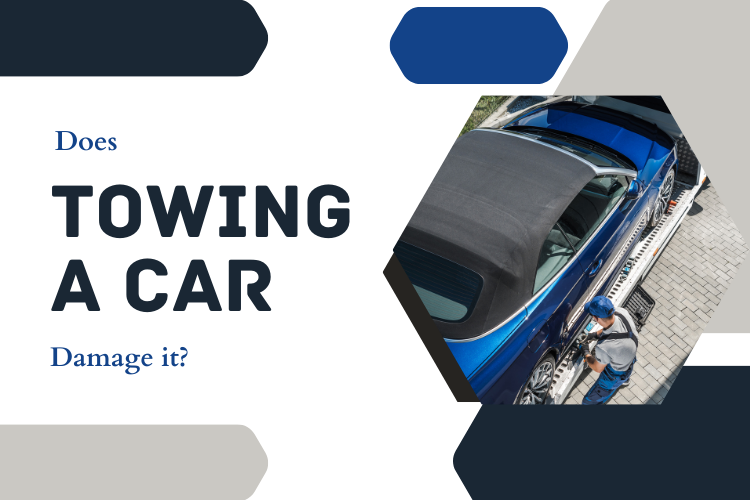
Every day, about 55,000 vehicles are towed across the United States due to breakdowns, accidents, parking violations, or long-distance moves. As cars get older and more complex, many drivers find themselves wondering if towing a car damages it.
The short answer is that towing can damage your vehicle if it’s done incorrectly. While towing is often unavoidable and sometimes essential, improper methods can lead to drivetrain issues, suspension wear, or exterior damage. Understanding when towing is safe and when it isn’t can help you protect your vehicle and avoid costly repairs.
Key Takeaways
- Towing does not automatically damage a car, but improper techniques can cause mechanical and cosmetic issues.
- Transmission damage is one of the biggest risks, especially for automatic, AWD, and 4WD vehicles.
- Flatbed towing is generally the safest option because all four wheels are off the ground.
- Poorly secured vehicles can suffer exterior damage, including bumper scrapes, dents, and scratches.
In This Guide:
- Is Towing Bad for Your Car?
- Can Towing Damage a Car?
- Types of Towing Damage
- How to Prevent Car Damage When Towing?
- What Are Other Options for Car Transportation?
- Bottom Line
- Preventing Car Tow Damage FAQs
Is Towing Bad for Your Car?
Towing is not inherently bad for your vehicle, but the risks depend heavily on how the car is towed. Many drivers worry about long distance towing because they have heard stories of transmission failure or suspension problems after a tow.
Improper handling can result in harm to your vehicle. whether it be through AAA Towing or another service. The risks vary depending on the type of tow, the vehicle’s condition, and how it is secured during the process. Once you understand the types of damage and how to prevent them, you can ensure your vehicle remains safe while being towed.
Can Towing Damage a Car?
Yes, towing can damage a car if the proper precautions are not taken. Vehicles are engineered differently, and what works for one model may be harmful to another. Automatic transmissions, AWD systems, and low-clearance vehicles are particularly vulnerable. There are many reasons why your vehicle may need towing services.
Perhaps you were taking a long road trip, and your car broke down in the middle of the road. Or your fuel gauge was faulty and surprised you by dropping to empty, and you needed an escort service to get to the nearest gas pump. Whatever the reason, you will need the services of an experienced towing company. Towing a vehicle in the right way is crucial to its safety.
People often pull their cars themselves to avoid the cost of towing services. They may hire inexperienced tow truck drivers to solve the problem cheaply to cut costs and then worry that the tow truck damaged my car.
They don’t realize that applying the wrong towing methods can damage their car, costing them even more than they might have anticipated to save initially. Using the wrong towing techniques can lead to several problems, resulting in severe damage to your vehicle. Whether you tow your car or hire a company, you must remain cautious while transporting a salvaged car.
This often leads to disputes about responsibility and raises common questions about whether towing companies are liable for damage. Liability usually depends on proof of negligence and whether the towing company followed proper procedures.
Types of Towing Damage
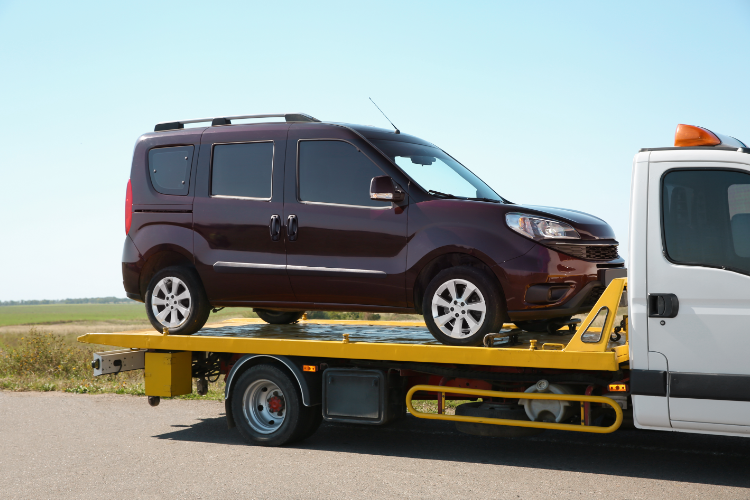
Towing-related damage generally falls into two main categories: mechanical damage and cosmetic damage.
1. Mechanical Issues
Mechanical damage is often the most expensive and hardest to detect immediately after towing. One of the primary concerns while towing the car is damage to the mechanical systems. This is particularly true for vehicles with automatic transmissions.
Manual and Automatic Transmission Damage
Transmission damage is one of the most common concerns when towing. Manual transmission vehicles are usually easier to tow, provided they are placed in neutral. Automatic transmissions, however, are far more sensitive.
When an automatic vehicle is towed with its drive wheels on the ground, internal components may not receive proper lubrication. This can lead to overheating and long-term transmission failure. Even manual vehicles can suffer damage if they are left in park instead of neutral during towing. Experts recommend towing the vehicle with the back wheels on the ground. This can prevent damage to the transmission.
Suspension and Alignment Problems
Improper towing can also strain the suspension system. Uneven weight distribution, sudden jerks, or long-distance towing over rough roads can throw off alignment and accelerate wear on shocks and struts. These issues may not be obvious right away but often result in uneven tire wear and poor handling over time.
2. Cosmetic Damage
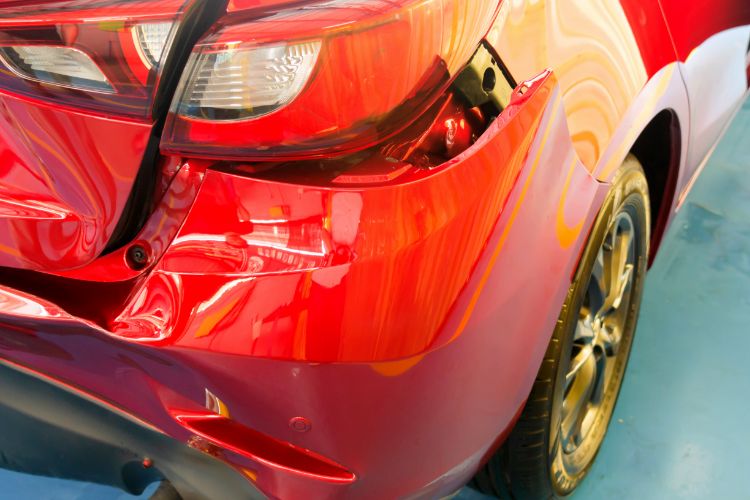
Even if your car is mechanically sound, cosmetic damage is a potential risk. Cosmetic damage occurs if the vehicle isn’t securely fastened to the tow truck or trailer, it can result in dents, scratches, and paint chipping.
Scratches, Dents, and Body Damage
Exterior damage usually occurs when a vehicle is not secured properly. Loose straps, chains, or cables can rub against paint and body panels, causing scratches and dents. Sudden stops or sharp turns during towing can also lead to impact damage.
While these problems might not influence a vehicle’s performance, they are still expensive to repair. When you employ a professional towing company, you should always pay close attention to ensure they correctly secure your vehicle to the tow truck.
Bumper Damage
Bumper damage is especially common when hooks or chains are positioned incorrectly. Front and rear bumpers can crack, scrape, or detach entirely if the towing setup isn’t suited to the vehicle’s design. Inexperienced tow truck drivers might even smash your car, causing extensive damage to its bumper. The extent of the damage depends on the size of the truck.
How to Prevent Car Damage When Towing?

You can tow a vehicle safely by following the correct guidelines. The good news is that many of these issues can be avoided with proper preparation and care. Before trying to tow a car on your own or even hiring a towing company, be sure to follow these general instructions:
- Put your transmission in neutral
- Make sure your parking and emergency brakes are off
- The rear wheels should be on the ground, and your rear driveshaft is temporarily removed
- Ask the towing company to use a flatbed truck to tow your vehicle
- Only hire an experienced towing company with trained drivers
Pick the Right Type of Tow
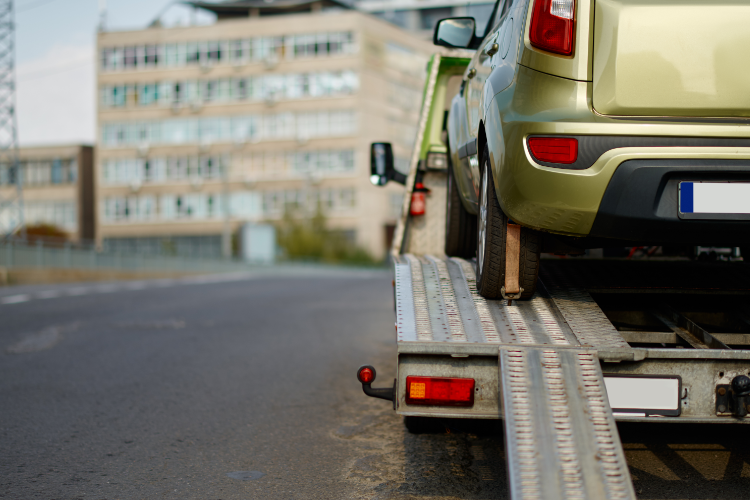
There are several ways to tow a car. Selecting the correct towing method is one of the most important factors in preventing damage:
Flatbed Towing
Flatbed towing is widely considered the safest option. Because all four wheels are off the ground, there is no strain on the transmission, suspension, or tires. This method works well for nearly all vehicle types, including AWD, luxury, and low-clearance cars. One of the most significant advantages of flatbed towing is that it makes loading and unloading in tight spaces easier.
Hook and Chain Towing
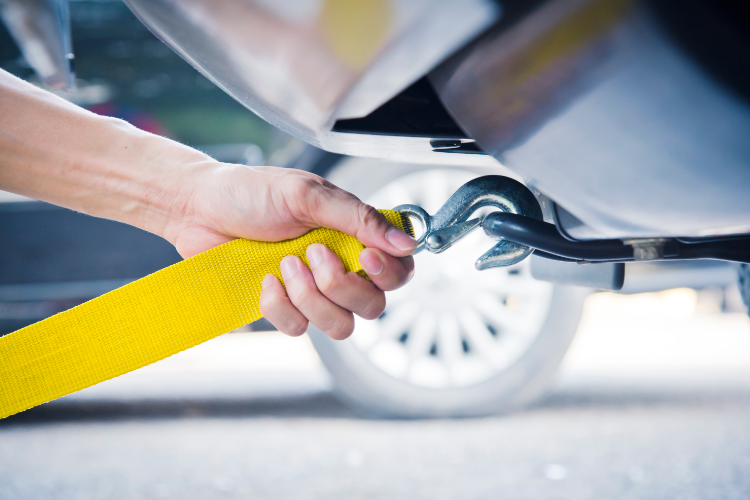
Hook and chain towing is less common today due to the higher risk of damage. While it may work for short distances, it often causes exterior wear and can stress the drivetrain if not used correctly.
This method uses a hook or series of chains that are attached to a vehicle’s chassis. Front-wheel drive vehicles are towed by their front end. Read-wheel drive cars are towed from the back. If your car needs to be towed, you must pick a towing method best suited for your situation and vehicle before you have it towed.
Dolly Towing
Dolly towing lifts two wheels off the ground and is typically used for front-wheel-drive vehicles. However, it can cause problems for rear-wheel-drive, AWD, and 4WD vehicles if not configured properly. Dolly towing is best limited to short distances. It’s not suitable for longer journeys because it puts tremendous stress on a car’s suspension system.
The most significant advantage of dolly towing is that small vehicles can be towed without needing a full-sized tow truck.
Check and Secure Your Car Before Towing
Before towing begins, it’s essential to check your vehicle for any existing mechanical or cosmetic issues. Ensure your car is in neutral and the parking brake is disengaged. Checking these basics ensures your vehicle is ready to move without further damage.
To prevent damage, secure the vehicle properly. If improperly fastened, the car could move or shift during the tow. Car movement while towing can lead to mechanical and cosmetic issues. Double-check all connections and make sure the vehicle is stable before moving.
What Are Other Options for Car Transportation?
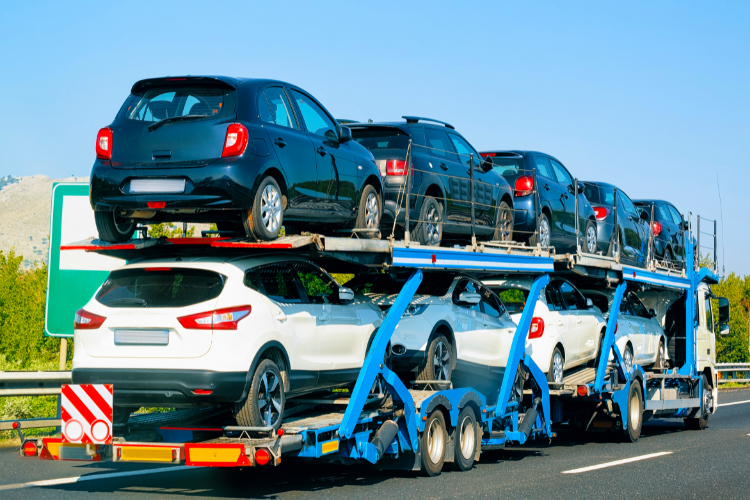
If you are worried about the risks associated with towing, go for professional auto transport services like Sherpa Auto Transport. Sherpa is driven to provide what every car shipping customer deserves: a transparent and stress-free auto transport experience.
Experienced and professional drivers can be a safer and more reliable option. Auto shipping is ideal for relocations, online car purchases, classic cars, and situations where minimizing risk matters most. With trained drivers, vetted carriers, and transparent pricing, professional transport offers peace of mind beyond traditional towing. Whether it’s a flatbed transport or an enclosed trailer, auto shipping minimizes the risk of damage compared to traditional towing.
Bottom Line
As cars get newer and more complex, many drivers find themselves wondering if towing does damage to their car. It can, but only when the wrong methods are used. The safest approach depends on your vehicle type, distance, and the experience of the provider handling your car.
For short roadside emergencies, proper towing techniques can minimize risk. For long-distance moves or high-value vehicles, Sherpa Auto Transport offers a safer, more reliable alternative that protects your car from unnecessary wear and damage giving you confidence every mile of the journey.
Preventing Car Tow Damage FAQs
Does towing damage automatic transmissions?
Yes, it can. Automatic transmissions are particularly vulnerable when towed with drive wheels on the ground. Without proper lubrication, internal components can overheat and fail. Flatbed towing is the safest option for automatic vehicles.
Is flatbed towing safer for my car?
In most cases, yes. Flatbed towing keeps all four wheels off the road, reducing the risk of transmission, suspension, and tire damage. It’s the preferred method for AWD, luxury, and low-clearance vehicles.
Can towing damage all-wheel drive (AWD) or four-wheel drive (4WD) cars?
Absolutely. AWD and 4WD systems are especially sensitive to improper towing. Towing these vehicles with any wheels on the ground can damage the drivetrain. Flatbed towing or professional auto transport is strongly recommended.